
Retatrutide Explained: Why Carbohydrates Still Have a Role

What is retatrutide and why it is being talked about
Retatrutide is an investigational weight loss medication that is currently going through human clinical trials.
It is not yet approved for general use, but early research has made it one of the most talked about developments in metabolic health.
Retatrutide is often referred to as Triple-G because it works across three key hormone pathways at the same time.
These pathways influence appetite regulation, insulin and blood sugar control, and how the body uses energy.
Unlike earlier GLP-1 medications that focused mainly on eating less, Triple-G appears to work by improving how the body uses fuel.
That difference is why nutrition, particularly carbohydrates, matters more than many people expect.
Why carbs may actually improve fat loss on retatrutide
For years, weight loss advice has told people the same thing.
Cut carbs.
Eat as little as possible.
Push harder.
New research is starting to show that this approach may be working against the body rather than with it.
Retatrutide, often referred to as Triple-G, is a clear example of that shift.
It highlights something many people have been missing.
Carbohydrates are not the enemy.
What makes retatrutide different from previous weight loss drugs
Retatrutide is described as a Triple-G medication because it works on three systems at once.
Appetite regulation
Insulin and blood sugar control
Energy usage and fat metabolism
Earlier GLP-1 medications focused mainly on reducing appetite.
While that can lower calorie intake, it often leads to low energy, muscle loss, and stalled progress.
Triple-G works differently.
It encourages the body to use fuel more efficiently rather than simply eating less.
And fuel matters.
Why carbs play a key role in making Triple-G more effective
One of the most misunderstood parts of modern weight loss is carbohydrates.
Many people assume eating fewer carbs automatically means better fat loss.
In reality, removing carbs too aggressively can:
Lower energy availability
Increase muscle breakdown
Reduce training quality and daily movement
Slow metabolic rate over time
Triple-G medications rely on the body being metabolically active.
Carbohydrates help drive that activity.
They:
Support insulin sensitivity rather than harming it
Improve nutrient delivery into muscle tissue
Allow fat to be burned more efficiently
Protect lean mass during weight loss
In short, carbs help the medication do its job properly.
Fat loss works better when the body feels safe
The body does not lose fat efficiently when it feels under threat.
Extreme restriction sends the opposite signal.
When carbs are too low, the body shifts into conservation mode.
Energy drops
Stress hormones rise
Muscle tissue is used for fuel
Fat loss slows despite eating less
Triple-G appears to work best when the body is supported rather than starved.
That means enough energy to train, move, recover, and function.
Carbohydrates provide that signal.
Why cutting carbs can actually reduce results
Many people make the mistake of pairing GLP-1 medications with very low-carb diets.
On paper, it sounds logical.
In practice, it often leads to:
Loss of strength
Reduced muscle mass
Poor workout recovery
Fat loss plateaus
Carbs help preserve muscle.
Muscle helps burn fat.
Removing carbs removes that advantage.
Triple-G is not about eating less food.
It is about using food better.
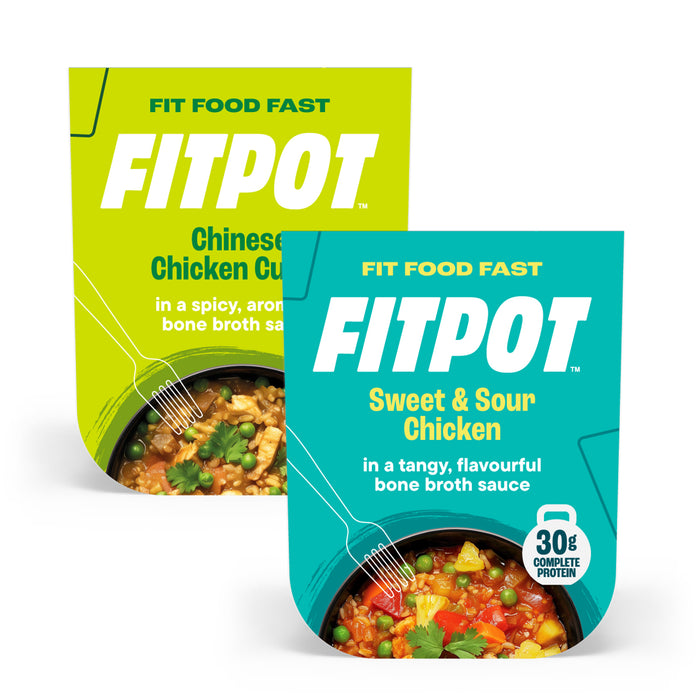
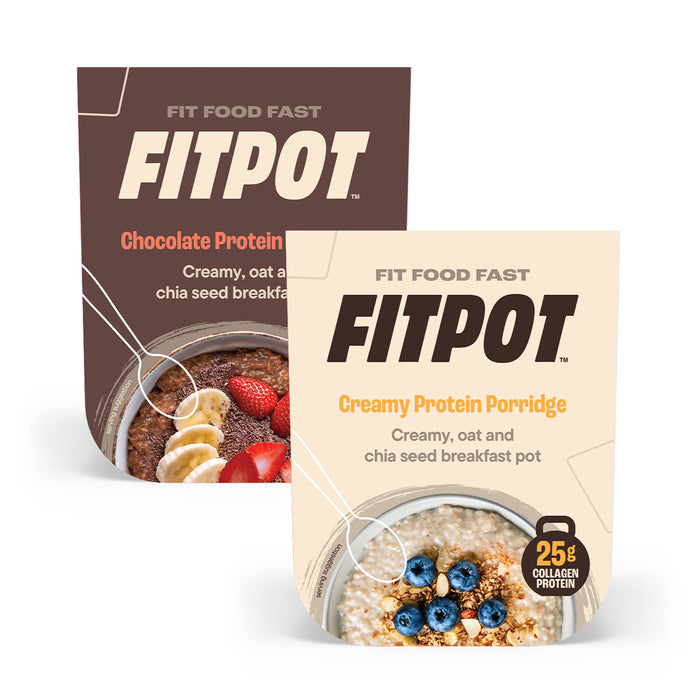
How FitPot supports this carb-inclusive approach
One challenge with GLP-1 medications is that appetite drops, but nutritional needs remain.
When meals become irregular or unbalanced, results suffer.
FitPot meals are designed to support:
High protein to protect lean mass
Balanced carbohydrates to support energy and fat loss
Nutrient density when portions are smaller
Consistency without overthinking
Meals are ready in minutes, fridge and freezer friendly, and portioned to work even when appetite is reduced.
This makes it easier to eat enough, often enough, without friction.
The future of weight loss is not low-carb
Retatrutide and other Triple-G developments are pointing in a clear direction.
Sustainable fat loss does not come from extreme restriction.
It comes from:
Adequate protein
Strategic carbohydrate intake
Consistent eating patterns
Removing daily friction
Carbs are not something to fear.
They are a tool.
When used properly, they help Triple-G medications deliver better fat loss, better energy, and better long-term outcomes.
Better results come from better fuel
You do not need to eat perfectly.
You do not need to eliminate entire food groups.
You need food that works with your physiology.
Triple-G is not about doing more.
It is about doing less wrong.
Balanced meals, eaten consistently, make all the difference.
Important information
This article is for general informational and educational purposes only.
Retatrutide is an investigational medication currently undergoing human clinical trials and is not approved for general use.
This content does not constitute medical advice, diagnosis, or treatment.
Always consult your GP, pharmacist, or prescribing clinician before starting, stopping, or changing any medication or dietary approach.